Start knife making
Shape a bar of steel into a real knife: cut it, file it, harden it and give it a handle. Here's the video that hooks everyone, and everything you need for your first knife.
Space neededA workbench, plus outdoors
First projectA small knife in two weekends
Skill levelBeginner, with care
Good forCampers and tinkerers
The video that hooks everyone
Turning a rusty spike into a miniature knife
A rough, rusty railroad spike gets shaped and polished into a gleaming miniature fighting knife with a wood handle. Press play and see why it hooks people.
Is this your video? Claim your page and share in the sales
Tool list
What you need to start
Everything you need for your first project, and nothing you don't. It's everything you need for a real, working knife.
Starter kit
011084 steel barSimple knife steel that hardens in plain oil. Forgiving for a first knife.
02Hacksaw, files + sandpaperCut the shape, file the bevels and smooth it all by hand.
03Vise + clampsHold the blade still so your hands stay clear of it.
04Drill + bitsFor the handle pin holes, drilled before you harden the steel.
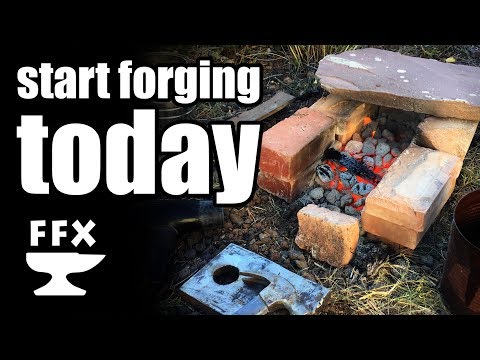
05Forge + a magnetA simple backyard forge heats a small blade. The magnet tells you when it's hot enough.
06Quench oil + lidded metal canWarm canola oil hardens the steel. The lid smothers a flare-up.
07Fire extinguisherRated for oil fires. Next to the quench, every time.
08Handle kit + sharpening stoneWood scales, pins and two-part epoxy, plus a stone for the edge.
09Safety glasses + respiratorFor sparks and the fine metal dust from filing and sanding.
The manual tells you what to look for when you buy each one.
- 1Quenching with the wrong setupA plastic tub or a shallow pan of oil can catch fire. Use a lidded metal can, plenty of oil, and keep an extinguisher right there.
- 2Filing the edge too thin firstA thin edge can warp or crack in the quench. Stop at about the thickness of a dime, then sharpen after.
- 3Skipping the temperSteel fresh from the quench is brittle as glass. Temper it in the oven the same day.